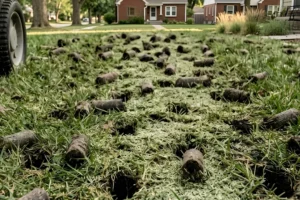

Every fall, a neighbor stops us at the mailbox and asks the same thing. “Is it too late to aerate?” In Nebraska, fall is one of the best times to aerate most lawns. At ShurLawn & Landscape, we recently completed core aeration on a large yard in west Omaha.
Working with a professional lawn aerator helps loosen compacted soil, allowing air, water, and nutrients to reach the grass roots. Here’s why fall aeration can make such a difference for Omaha lawns and how to know when your yard needs it.
Is Fall the Best Time to Aerate in Omaha?
Why Timing Matters
Fall is the best time to aerate and overseed in Omaha. Soil temperatures are still warm, but the air has cooled down, so new grass can grow without the heat fighting it.
Cool-season grasses like tall fescue and bluegrass love this weather. Mid-September through late October is the sweet spot, and we try to finish most jobs by then.
What Happens If You Wait Until Spring?
Spring aeration can also benefit your lawn, and understanding why spring is an ideal time for lawn aeration can help you choose the right schedule.
However, fall often provides better conditions for overseeding cool-season grasses in Omaha. Weeds wake up fast next spring, and young seedlings have to fight them for water and room.
Summer stress then hits before the roots get strong. Fall gives your lawn a head start, so it comes back thicker.
What Is Core Aeration, Anyway?
How the Process Works
Core aeration pulls small plugs of soil out of your lawn. Those little holes help relieve compacted soil, and proper core lawn aeration improves air and water movement into the soil, supporting healthier grass roots.
You will see the plugs on top of the grass for a week or two. They look a bit like tiny muddy cigars, but they break down on their own.
Why Omaha Lawns Need It
Our soil is mostly heavy clay soil. Clay packs down tight, and compacted soil makes it hard for roots to breathe. We just aerated a yard where the screwdriver test failed.
We could barely push it into the ground! After core aeration, that lawn drank water like it had been walking in the desert.
What Are the Benefits of Fall Aeration and Overseeding?
Better Seed-to-Soil Contact
Seed needs to touch soil to grow. When we aerate and overseed together, the seed falls right into the holes, which gives great seed-to-soil contact. That means better germination and fewer bare spots.
What You Will Notice
Here is what our customers tell us after a good fall lawn care visit:
Thicker grass fills in thin areas, so weeds have less room to take over.
Stronger root growth helps the lawn handle summer stress and cold, freezing temperatures.
Less runoff happens because water soaks in instead of running into the street.
Better nutrient penetration means fertilizer reaches the roots instead of sitting on top.
Should You Fertilize After You Aerate?
Starter Fertilizer and Fall Fertilization
The timing is great. Starter fertilizer has phosphorus, which helps new seedlings grow strong roots. Later in the season, a fall fertilization with potassium helps your lawn get ready for dormancy.
Potassium strengthens the grass, so it can handle a long winter without cracking under the cold. We also treat weeds in the fall, since weed control works well when the weather is cool.
How Do You Take Care of Your Lawn After Aeration?
Proper Watering
Proper watering is the biggest job. Keep the soil consistently moist, which often means light watering 2-3 times a day until the new grass sprouts. Once it comes up, water less often but deeper.
Mowing and Maintenance
Wait to mow until the new grass is about three inches tall, and make sure your mower blade is sharp. Keep foot traffic low too. Your dog may not love this rule, but the seedlings will thank you.
Frequently Asked Questions About Lawn Aeration
1. Can I aerate in late October?
Yes, you can, as long as the ground is not frozen. Late October still works for many Omaha lawns, but earlier is better for seed to sprout.
2. Do I need to aerate every year?
Yes, for most Omaha lawns with clay soil. Yearly aeration keeps the soil from getting compacted again and helps your lawn stay healthy.
3. Can I skip aeration if my lawn looks fine?
No, it is best not to skip it. A lawn can look green on top while the roots are struggling, and aeration helps fix that before problems show up.
Time to Aerate and Overseed Your Lawn
Fall is the best time to aerate in Omaha, NE. The soil is warm, the air is cool, and your lawn is ready to soak up the help. Skip it, and you may be chasing thin patches next spring!
At ShurLawn & Landscape, we just do this work every day for Omaha neighbors, and we love watching a tired lawn turn thick and green.
Call us today at 402-572-0710 for lawn aeration services. We will check your soil, share honest advice, and get your yard ready for winter.