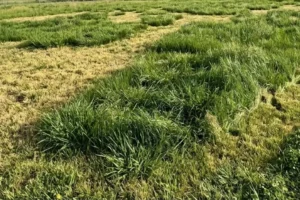

A lawn can look healthy one week and then look patchy the next. As an expert lawn services company, we see this all the time across Sarpy County. One side of the yard grows thick and green, while another side looks thin, yellow, or weak. Homeowners often think it is just watering or mowing, but the real problem is usually under the soil.
We just finished a lawn check in Papillion, where the grass near the sidewalk was growing twice as fast as the backyard. The homeowner watered the whole yard the same way. After we checked the soil, we found packed clay in one area and weak soil nutrients in another. Once we fixed the soil problem, the lawn started filling back in.
In Sarpy County, soil can change fast from one part of the yard to another. Clay soil, poor drainage, buried debris, and grub damage can all make grass grow unevenly. A lawn may look calm on top, but the soil below can be causing all the trouble, like a sneaky raccoon stealing dog food at night.
Why Does Grass Grow Faster In One Part Of The Lawn?
Uneven grass growth usually starts below the surface. Different soil conditions change how roots grow and how water moves through the yard.
Clay Soil Can Block Healthy Root Growth
Sarpy County has a lot of heavy clay soil. Clay holds water for too long after rain. During hot summer days, it also becomes hard like a brick. Grassroots struggle to move through it.
We just worked on a yard in Gretna where the front lawn stayed wet for days after storms. The grass near the driveway turned yellow while the middle stayed green. The soil was packed tight from years of foot traffic and mower use.
Compacted soil. Grass roots cannot spread well when the soil gets hard and tight.
Poor airflow. Roots need air in the soil just like people need fresh air outside.
Slow drainage. Water sits too long and can weaken healthy grass.
Buried Construction Debris Can Hurt Lawn Growth
Many newer homes in Sarpy County still have leftover debris buried under the lawn. We often find rocks, wood scraps, or chunks of concrete under patchy areas.
Grass roots stop growing when they hit these hard materials. Water also moves differently in these spots, which causes uneven color and growth.
We just checked a lawn in Ralston where one strip of grass stayed brown every summer. A few inches below the surface was leftover gravel from an old building project.
How Does Poor Drainage Affect Grass?
Water problems are one of the biggest causes of uneven lawns. Some parts of the yard stay soaked while others dry out too fast.
Wet Areas Can Damage Roots
Grass roots can rot when water sits too long. Fungus also grows faster in wet soil.
We recently treated a lawn near Council Bluffs where the backyard stayed muddy after every rainstorm. The homeowner thought the grass needed more water, but the roots were drowning.
Standing water. Grass roots weaken when they stay soaked for long periods.
Fungus growth. Wet soil creates the perfect place for lawn fungus to spread.
Thin turf. Weak roots cannot grow thick, healthy grass.
Dry Soil Can Stop Grass From Growing
Some soil repels water after long, hot weather. Water rolls off instead of soaking in.
This happens a lot during Nebraska summers. One area of the lawn may stay green while another turns brown fast.
We just added soil treatment and aeration to a lawn in Bellevue where water was running straight down the slope without soaking into the grass.
If your lawn has heavy clay soil, you may also want to read our guide, Does Sarpy County Clay Soil Require Spring Aeration for better growth, to learn how core aeration improves water movement, reduces compaction, and encourages healthier root development.
Can Soil Nutrients Cause Uneven Grass Growth?
Yes. Grass needs balanced nutrients to grow evenly across the lawn.
Low Nutrients Create Weak Grass
Some areas lose nutrients faster because of runoff, pet spots, or poor soil quality.
We often test lawns where phosphorus or nitrogen levels are low in only one section of the yard. The grass there grows slower and thinner.
Low nitrogen. Grass may look pale green or yellow.
Weak phosphorus levels. Roots stay shallow and weak.
Unbalanced soil. Some spots grow too fast while others struggle.
Wrong Soil pH Can Stress Grass.
Grass grows best when the soil pH stays balanced. If the soil becomes too acidic or too alkaline, roots cannot absorb nutrients well.
We just treated a lawn in Papillion where the homeowner kept fertilizing, but the grass still looked weak. The pH levels were blocking nutrient use.
Do Grubs And Pests Make Grass Grow Unevenly?
They sure do. We find grub damage in many Sarpy County lawns every year.
Grubs feed on grass roots under the soil. The grass above starts turning brown and pulls up easily.
We recently repaired a lawn where raccoons were digging holes every night searching for grubs like they found an all-you-can-eat buffet under the turf.
Signs Of Underground Pest Damage
Loose grass. Turf pulls up easily from the soil.
Brown patches. Damaged roots stop feeding the grass blades.
Animal digging. Raccoons and birds often search for grubs underground.
How Do We Fix Uneven Grass Growth?
Every lawn needs a plan based on its soil condition. We never treat every yard the same way because every lawn tells a different story.
We start with a soil check and look at drainage, compaction, pests, and nutrient levels. After that, we build a treatment plan that fits the lawn.
Understanding your soil is one of the most important steps toward building a healthier lawn. The University of Nebraska–Lincoln Extension provides research-based information on soil health, lawn care, and turfgrass management to help homeowners identify common soil problems and improve growing conditions throughout the year.
Common Lawn Fixes We Use
Core aeration. Small holes help air and water move through compacted soil.
Soil testing. Soil tests help us find missing nutrients and pH problems.
Targeted treatments. We treat fungus, pests, or weak areas based on what the lawn actually needs.
Slow-release fertilizer. Grass gets steady feeding without fast, weak growth.
Frequently Asked Questions About Uneven Grass Growth
1. Can compacted soil make grass grow unevenly?
Yes. Compacted soil blocks air, water, and root growth. Grass in those areas often looks thin and weak.
2. Can grubs cause sudden brown patches in a lawn?
Yes. Grubs feed on the roots below the grass. The damaged grass can turn brown very fast.
3. Can soil testing help fix uneven grass growth?
Yes. Soil testing shows nutrient levels and pH problems in the lawn. This helps us choose the right treatment for each area.
What We See Every Week At ShurLawn & Landscape
At ShurLawn & Landscape, we work on lawns across Sarpy County every week. We just finished treating a yard where half the lawn struggled because the soil under the grass was packed tighter than a football stadium parking lot after game day.
Most uneven lawns are not random. The soil below is usually sending clear warning signs. Once the soil gets fixed, the lawn has a much better chance of growing thick and healthy again.
If your lawn has strange patches, uneven color, or grass growing at different speeds, give us a call at 402-572-0710. We can check the soil, find the cause, and help bring the lawn back to life with a plan built for Nebraska lawns.