
A wall can look strong and still be one rainstorm away from leaning like a tired tourist. We just finished a retaining wall project in the Omaha metro where the old wall bulged out because water had nowhere to go.
At ShurLawn & Landscape, we design and install retaining walls for Omaha homeowners, and drainage is the first thing we talk about. If you’re looking for reliable drainage near Omaha, understanding how water builds up behind retaining walls can help you avoid cracks, leaning walls, and expensive repairs. Here’s why proper drainage matters more than most homeowners realize.
Why Does a Retaining Wall Need Drainage?
A retaining wall holds back soil. Soil holds water, and water is heavy. Without proper drainage, that water builds up behind the wall and pushes on it day after day.
Water Adds Hidden Weight
Wet soil weighs much more than dry soil. A wall that was built for dry dirt can fail when the ground fills up like a sponge. Walls built without drainage often crack, tilt, or slide.
Pressure Builds Behind the Wall
When rain soaks in and cannot escape, pressure grows against the back of the wall. This is one of the most common causes of retaining wall failure. We see it on both block walls and stone walls.
What Makes Nebraska Weather Hard on Walls?
Omaha gets heavy spring rain, big storms, and hard freezes. Each one tests your wall in a different way.
Freezing and Thawing
Water that sits behind the wall can freeze in winter. Ice takes up more room than water, so it pushes the wall forward. Then it melts, and the wall settles in a new spot that is not quite right. Repeat that a few winters, and you have a failing wall.
Heavy Rain and Clay Soil
Many Omaha properties have clay in the soil. Clay holds water longer than sandy soil, so it stays wet and heavy. That is why drainage needs are bigger here than in many other places.
What Does Proper Drainage Look Like?
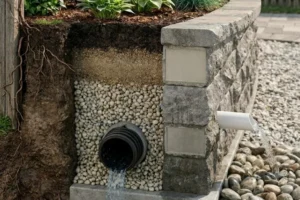
Good drainage systems give water a clear path out. We include these drainage components on every wall we build:
Drainage stone
We place clean gravel behind the wall so water can move through it instead of sitting still.
Perforated pipe
We lay a pipe at the base that carries water away from the wall to a safe spot.
Filter fabric
We wrap the stone with fabric so soil does not clog the gaps over time.
Weep holes or outlets
We leave small exits so extra water can escape from behind the wall face.
Proper slope
We shape the ground so rain runs away from the top of the wall, not into it.
Why Each Piece Matters
Skip one part, and the whole system can fail. A pipe with no stone clogs fast, and stone with no exit just becomes a bathtub.
Does Wall Height Change Drainage Needs?
Yes, and by a lot. Shorter walls move less soil, but they still need a way to release water. Taller walls hold back more soil and face more pressure.
Many taller walls also need reinforcement, such as grid layers that tie the wall into the hill. We recommend the right setup after we check the slope and soil on your property.
Which Materials Work Best?
Every wall type can last if it drains well. A concrete block wall is strong and easy to repair. Natural stone looks beautiful and fits many landscape styles.
Poured concrete retaining walls are tough, but they still need drainage behind them. We help you pick retaining wall materials that fit your budget, your yard, and your outdoor space.
Can I Build a Retaining Wall Myself?
Some people try DIY retaining walls, and we respect the spirit. Still, a small mistake can lead to wall failure. If the base is off or the drainage is missing, the wall may look fine for a year and then lean.
Professional installation protects your money and your property. Even a sturdy-looking wall can develop problems if water has no clear escape route.
Understanding how proper water management protects retaining walls can help you recognize why drainage planning is just as important as choosing the right materials. A wall that lasts is one that was built with care from the ground up.
Frequently Asked Questions About Drainage
1. Does every retaining wall need drainage?
Yes. Water will build up behind any wall that holds soil, and that pressure can push it over. Drainage gives that water a safe way out.
2. Can poor drainage cause a retaining wall to fail?
Yes. Extra water adds weight and pressure, and freezing makes it worse. Over time, the wall can bulge, crack, or fall.
3. Can I add drainage to an old wall?
Sometimes. If the wall is still in good shape, we may be able to add outlets or fix the water flow. If it is already leaning, rebuilding is often the safer choice.
Get a Free Estimate From ShurLawn & Landscape
A wall that lasts starts with what you cannot see. Gravel, pipe, fabric, and a smart slope protect your wall from water, ice, and erosion. That means a safer yard and fewer surprise repair bills.
If you need a retaining wall in Omaha, call ShurLawn & Landscape today at 402-572-0710 for a free estimate. We design and install retaining walls throughout Omaha and the surrounding areas, and we explain every step in plain words.
Let us build a wall that protects your property and keeps your outdoor space usable for years.