
Every spring, the same question lands on our desks. A homeowner stands in the yard, looks at a bare spot, and asks if pavers or stamped concrete is the smarter pick. Both look great, and both can last for years. Omaha winters add a twist, though, because our freeze-thaw weather can be tough on hard surfaces. We just finished a backyard job near Elkhorn, and the same questions came up, so let’s talk it through like neighbors. At ShurLawn & Landscape, our hardscape installation services in Omaha cover both, so we can show you where each one fits.
What Is the Difference Between Pavers and Stamped Concrete?
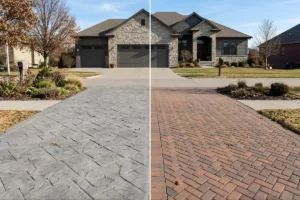
Before you compare stamped concrete and pavers, you need to know how each one is built. They may look alike from the street, but they feel very different underfoot.
What Are Pavers?
Pavers are individual pieces made from concrete, brick, or stone. Our crew sets each piece by hand on a packed base, and the pieces interlock like a puzzle. That is why people call pavers individual units, and why one broken piece is easy to replace.
What Is Stamped Concrete?
Stamped concrete starts as poured concrete. We pour one big concrete slab, add pigment for color, and press a pattern into it before it dries. The result can copy stone or brick, flagstone, or even wood, with a nice texture you can feel.
How Do Pavers and Stamped Concrete Handle Omaha Winters?
Winter is where this choice gets real. Water gets into small spaces, freezes, grows, and then melts again. That freeze-thaw cycle is the biggest test for any patio material in Nebraska.
What Happens to Concrete Cracks?
Concrete cracks sooner or later, and that is just how the stuff behaves. We cut control joints into every slab so the cracks show up in straight lines we planned. A good sealer also helps keep water out and keeps the color looking fresh.
Why Do Pavers Handle the Cold Well?
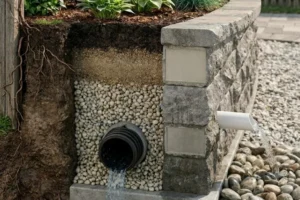
Pavers can move a little when the ground shifts, so they do not snap the way a solid slab might. Many paver systems are also permeable, which means water drains through the joints.
For long-term durability in our climate, that gives pavers a small edge.
How Much Does Each Option Cost?
Money matters, so let’s be honest about it. Stamped concrete typically has a lower cost because the work goes faster. Pavers are more labor-intensive since every piece is placed by hand, so labor costs climb.
On many jobs, pavers run about $20 to $30 per square foot, while stamped concrete lands lower. Your final price depends on the size, the shape, and the pattern you pick.
Which One Looks Better for Curb Appeal?
Both options can boost curb appeal, but they get there in different ways.
Stamped concrete gives you a seamless look with no lines between pieces, and many patterns are available.
Pavers give you a classic look with more color mixing, since we can blend a whole palette of shades in one patio.
Natural stone gives you real stone character, but it costs more, so many people pick concrete pavers that copy the look.
Landscape architects often mix both materials to get a balanced design. Pavers can frame a stamped concrete patio, and the aesthetic appeal gets a big lift.
Where Should I Use Pavers or Stamped Concrete?
The best spot depends on how you use the space. These are the jobs we do most.
Driveway projects often go to pavers, because a concrete driveway can crack under heavy trucks and road salt.
Walkway projects work well with either one, so choose stamped concrete when you want a smooth, quick install.
Pool deck projects like stamped concrete with a slip-resistant texture, or permeable pavers that drain fast.
Backyard patios are the most popular hardscape job, and both materials fit here. If that is your project, these simple patio layouts for Omaha backyards are a good place to start planning.
Commercial properties in Omaha also use both, since stores and offices want strong ground that looks sharp.
Which One Is Easier to Fix and Keep Clean?
Both are low maintenance, but they are not the same. With pavers, you get the ability to replace one stone without touching the rest.
With a slab, a repair can leave a patch that does not match. Stamped concrete needs a new sealer every few years, and pavers need fresh joint sand once in a while.
Neither one takes much work, and both beat a weekly mowing job. For a side-by-side look at more surfaces, Concrete Network has a paving materials comparison chart worth a quick read.
Frequently Asked Questions About Hardscaping Services
1. Is stamped concrete cheaper than pavers?
Yes, stamped concrete usually costs less up front. The install is faster, so there are fewer labor hours to pay for.
2. Can pavers handle Omaha winters better than a slab?
Yes, in most cases they can. Pavers can shift a little with the freeze-thaw cycle, so they are less likely to crack.
3. Can stamped concrete look like real stone?
Yes, a skilled installer can copy stone, brick, and flagstone with great detail. The color and texture look so close that guests often have to touch it to tell.
Pick the Surface That Fits Your Home
So, which one wins? If you want a lower cost and a smooth, seamless look, choose stamped concrete. If you want easy repairs and strong performance in freeze-thaw weather, pavers are hard to beat. Plenty of Omaha homeowners even blend the two.
Still not sure? Call or contact ShurLawn & Landscape today at 402-572-0710, and we will walk your yard with you, talk about your budget, and map out a plan that fits. We will even bring the coffee, but you have to pick the pattern.